BESS ENERGY STORAGE
BESS energy storage — lower costs, higher self-consumption, more stable power
Prefab BESS energy storage from EAB Solutions helps reduce peak demand, shift consumption away from expensive hours, increase photovoltaic self-consumption, and protect critical processes from power interruptions.
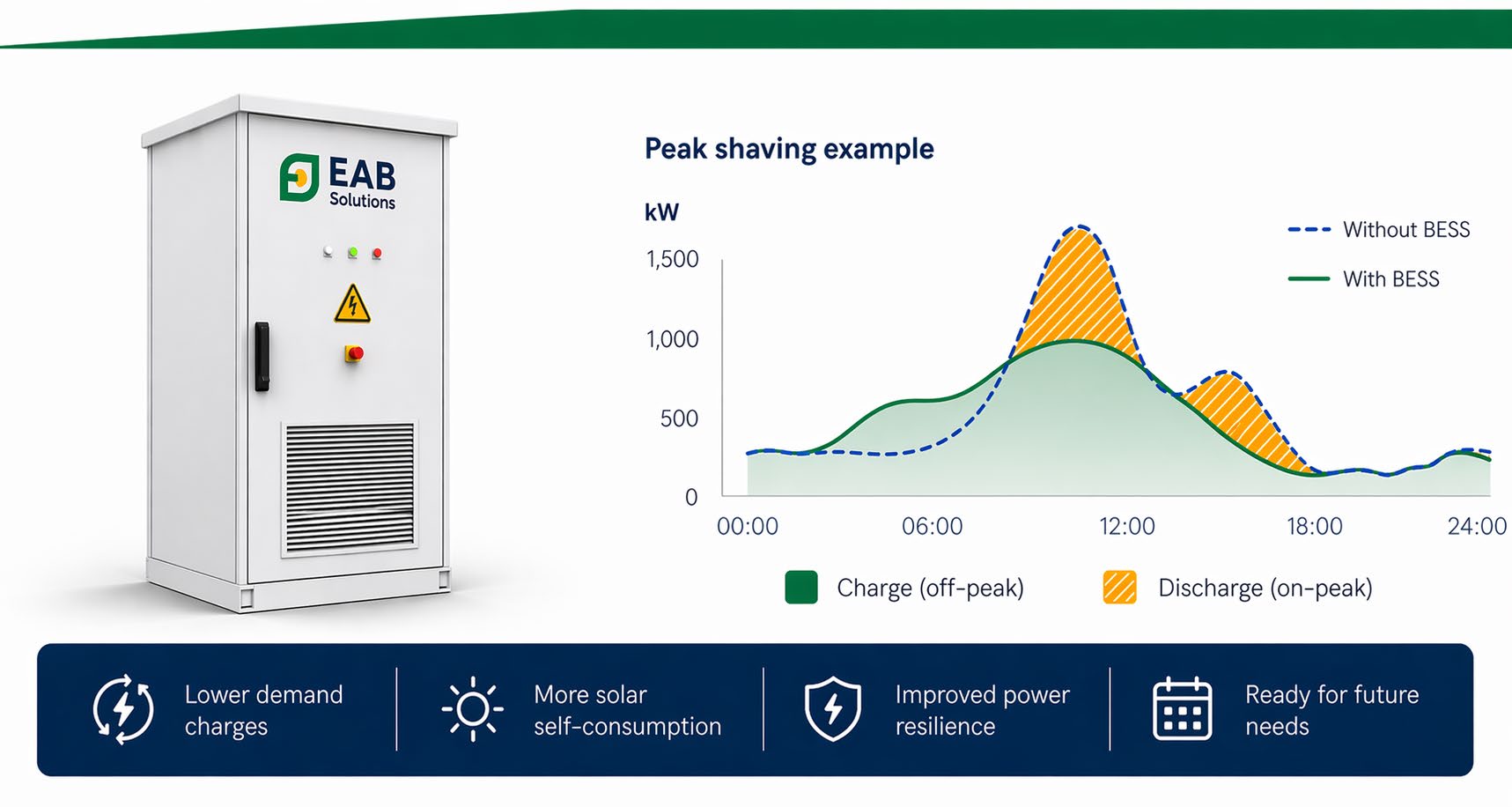
What is BESS energy storage?
BESS — Battery Energy Storage System — is a battery-based energy store designed to capture electricity and use it at the optimal moment: during peak demand, when site load increases, or when PV generation is lower than current consumption. In industrial facilities, BESS supports energy cost management, demand profile stabilization, and power security for selected processes.
System capabilities
Key BESS features
Peak demand reduction
BESS discharges during periods of highest demand, limiting power exceedances and costs linked to demand peaks.
- Peak shaving for industrial and commercial sites
- Stabilized energy demand profile
- Lower risk of penalties and contracted power costs
Time-shifting energy use
The battery charges when energy is cheaper or available from PV surplus, then powers the site during higher-price or higher-load periods.
- Load shifting for variable tariffs and peak hours
- Better use of off-peak energy
- Greater operating cost predictability
Higher PV self-consumption
BESS stores PV surplus and releases it when site demand exceeds current generation.
- Less energy exported to the grid
- Greater value from own PV production
- Better use of existing photovoltaic systems
Backup support for critical processes
Energy storage can provide UPS-like support for selected loads and processes, improving site resilience.
- Backup for key systems
- Reduced downtime risk
- Fast installation with minimal operational disruption
Modular architecture
Prefab BESS units enable fast deployment and sizing matched to energy consumption profile and site growth plans.
- 125 kW / 250+ kWh modules
- Scaling as demand grows
- Integration with PV, EMS, and site energy infrastructure
Deployment process
How does BESS work?
Energy profile analysis
We assess energy consumption, demand peaks, PV production, tariffs, and backup power needs.
Operating strategy selection
We define when the battery should charge, discharge, and support the site — for peak shaving, load shifting, PV self-consumption, or backup.
Infrastructure integration
BESS works with photovoltaics, energy meters, EMS, and key loads.
Cost and resilience optimization
The system limits demand peaks, increases use of own energy, and strengthens site continuity.
Applications
BESS use cases in industry and production
BESS energy storage is especially useful at sites with high instantaneous power demand, variable consumption profiles, photovoltaic generation, or a need to protect selected critical loads. The solution can help production plants manage energy more deliberately without disrupting core operations.
Peak demand reduction in production plants
In plants running high-power machinery, process lines, compressor rooms, cooling systems, or cyclically started equipment, BESS can limit short-term demand spikes. The battery discharges during peak load, supporting peak reduction and a more even demand profile.
Shifting consumption outside peak hours
At sites with time-dependent tariffs, BESS enables charging during favorable periods and using stored energy when power or energy has a greater impact on operating costs. This supports load shifting and can improve energy cost predictability.
Increasing use of photovoltaic energy
At plants with PV, BESS stores production surplus and uses it during later operating hours. Locally generated energy can power internal processes instead of being exported when it does not match current demand.
Backup power for critical loads
BESS can support selected critical loads such as control systems, automation, IT/OT infrastructure, selected production line elements, or auxiliary installations. The scope of backup should be tailored to technical requirements, hold time, and operational priorities.
Stabilizing site energy infrastructure
At sites with variable energy demand, BESS helps better balance local generation, consumption, and grid imports. Combined with EMS, it can support more precise control of energy flows and prepare the plant for further cost optimization.
Business benefits
Business benefits
Industries and sites
Typical applications
What can you gain after deploying BESS?
Lower peak power costs
Reduced charges and penalties from energy demand spikes.
Higher PV self-consumption
Use production surplus when energy has the greatest value for the site.
Greater power reliability
Support for critical loads and processes during disturbances.
Better energy control
Manage charging, discharging, and storage strategy based on data.
FAQ
Frequently asked questions
Have questions? Check the answers below or contact our expert.
Optimize energy costs today
Request an offer and our expert will get back to you within 24 hours with a tailored proposal.
What you get
- Initial cost review with no obligation
- Solution tailored to your business needs
- Response within one business day
- Technical support and expert consultation
- End-to-end delivery — from design to service